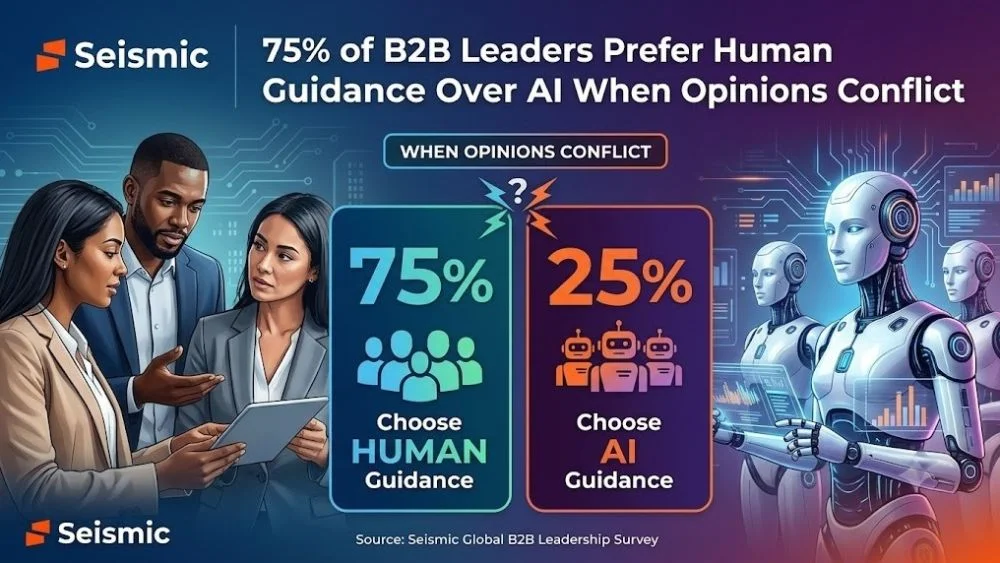
Seismic, the Go-To-Market Performance company, today released a new report highlighting the critical importance of human guidance for enterprise technology decisions. The research shows that 75% of B2B leaders will opt for human guidance over AI when the two are in conflict. The findings also demonstrate how artificial intelligence is transforming the B2B buying process and increasing the demand for experienced sales professionals.
The report, The New Go-to-Market Standard for B2B Selling, looks at what information C-suite buyers need to feel confident about technology purchasing decisions. It also looks at how GTM organizations can better prepare their sales teams to meet those expectations.
The B2B Leaders research finds that buyers now have unprecedented access to information from AI. But it’s this abundance that has made enterprise buying more complex. Buyers have to consider more stakeholders, weigh up conflicting information and deal with more scrutiny. Therefore, human judgment has become more important during the buying journey.
Three in four business leaders, or 75%, say they trust human guidance more when it conflicts with AI-generated content. Meanwhile, 46% say AI-generated information has increased their reliance on people during high-stakes decisions. Additionally, 34% depend on vendor representatives or human experts to validate claims they encounter elsewhere.
“AI has made information abundant, but buyers still need help deciding what matters,” said Rob Pinkerton, Chief Marketing Officer, Seismic. “This is creating a selling renaissance, where sellers play an increasingly important role and earn trust by helping buyers make sense of complexity, navigate tradeoffs and reach decisions they can defend.”
Seismic Highlights the Growing Importance of Human Expertise
As buyers increasingly employ AI for research, comparisons, and information gathering, salespeople remain indispensable. They help customers interpret the information and weigh their options before making big purchases. The report highlights several areas in which buyers still need human guidance. According to the report, over half (55%) of business leaders turn to vendor representatives or human experts to negotiate prices or contract terms.
In addition, 49% consult people and B2B Leaders to evaluate return on investment (ROI) or business case, while 45% rely on humans to assess potential risks and disadvantages. Moreover, 43% of respondents consult vendors or human experts to understand how a solution works in their particular business environment.
Expectations are higher for B2B Sales Teams
As more information becomes available via AI, the expectations of sales professionals are changing. Now buyers can research products, compare solutions and learn on their own. So, the sellers need to provide value beyond just sharing product details. More and more sales professionals will be asked to understand customer requirements, articulate financial benefits, and help stakeholders evaluate competing priorities. They also need to align product capabilities with business goals.
51% of business leaders say sellers could be doing more to help them quantify and explain ROI,” the research shows. The finding indicates a change in the traditional sales role. Salespeople must do more than present information; they must help buyers understand the implications of that information and make informed decisions.
Consequently, B2B Leaders businesses must strengthen their sales enablement strategies and equip teams with reliable information. They also need to provide relevant customer context and practical guidance throughout the sales process.
Seismic Emphasizes Consistent Seller Performance
“The higher the stakes, the more buyers turn to people,” Pinkerton said. “That raises the bar for every seller to deliver consistent, sound judgment. GTM teams need to make great seller performance repeatable by connecting trusted information, customer context and guidance in the flow of work, so every seller can act with confidence in the moments that matter.”
The results of the study further elaborate on Seismic’s thesis about the need for pairing AI-driven processes and human expertise. While the study does show the potential of artificial intelligence (AI) in research and information gathering, buyers will always rely on professionals who can guide them through the outcomes and understand implications for their business. The study results suggest how B2B sellers can affect this dynamic to improve their sales culture and prepare representatives to engage better with buyers in the future.
In this regard, Seismic’s research underlines the critical importance of human expertise in the modern B2B selling process. The report indicates that buyers will continue to benefit from human guidance, as AI-enabled systems can only address transactional and operational aspects of a purchase. In other words, humans will always be necessary to provide adequate expertise and explain the mechanics of a choice to clients. Therefore, businesses should invest in building such combinations of AI and human expertise that will help their employees communicate more effectively with clients and ensure successful purchases.
Looking for more updates on financial innovation and revenue-driven technology? Visit RevTech News for expert insights and the latest trends.
News Source: Businesswire.com