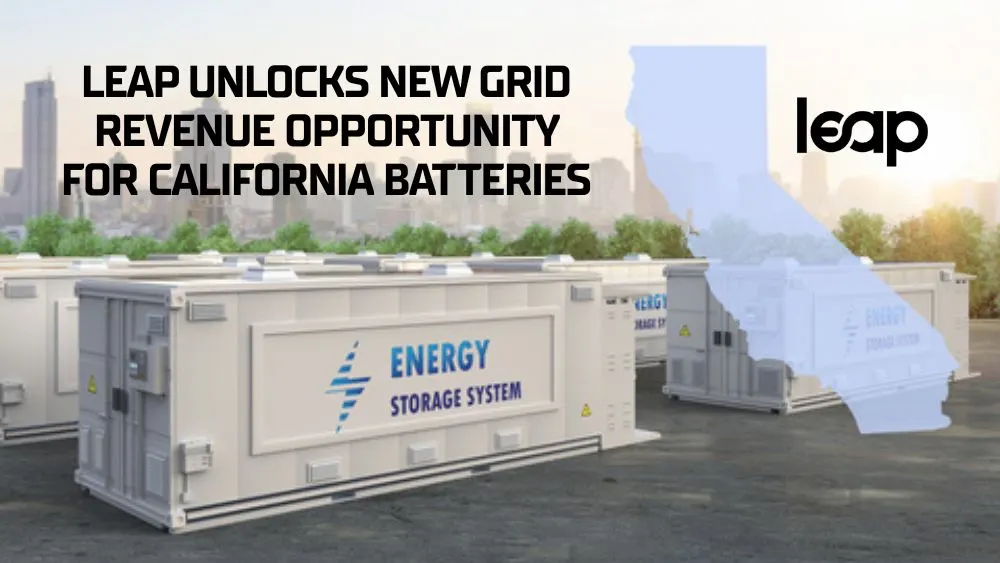
Leap announced the expansion of its battery monetization platform across California. The leading virtual power plant developer launched a new integration with California’s Emergency Load Reduction Program. This initiative allows Leap to pay battery owners for exporting stored electricity back to the grid during severe heatwaves.
Furthermore, this updated ELRP A.4 offering serves customers within the Pacific Gas and Electric Company service area. Historically, grid reliability programs rarely compensated behind-the-meter battery exports directly. Consequently, battery providers left substantial flexible power capacity unrewarded and unused.
Through this expansion, Leap compensates participating storage systems while eliminating complex sign-up steps. Conventional opt-in models yield single-digit participation rates due to multi-step utility authorizations. However, Leap enables technology providers to enroll eligible customer portfolios directly into grid programs. Customers receive clear notifications while retaining the ability to opt out easily.
Driving VPP Growth and Grid Resilience
Company executives highlighted how modernizing demand response frameworks unlocks hidden clean energy value.
“California’s grid needs flexible capacity now, and that means prioritizing programs designed to take full advantage of what behind-the-meter storage can provide,” said Trevor McManamon, VP of Markets at Leap. “Leap has been advocating for years to unlock the full potential of batteries. By compensating battery exports and simplifying enrollment, this offering gives our partners a new way to generate revenue while helping grid operators access more of the flexible capacity already available across California.”
Scaling Flexible Capacity Across California
Rising summer temperatures and surging power consumption continue placing immense operational pressure on local utilities. Therefore, Leap connects clean energy technology providers with lucrative utility monetization pathways.
Additionally, Leap optimizes portfolio dispatching without causing any disruptions to regular residential and commercial operations. By transforming inactive battery resources into virtual power plants, Leap enhances the reliability of the statewide grid system. In essence, increased market access guarantees that California benefits from every kilowatt-hour of stored batteries.
Faster Grid Decarbonization and Sustainability
Moreover, software-based integration solutions optimize grid operation at the commercial and residential property levels. Battery owners benefit from financial incentives while preserving their need for personal power reserve sources. Energy hardware vendors achieve a significant competitive edge in the California market.
Finally, grid operators enjoy immediate capacity available in times of sudden blackouts or heat emergencies. Upgrading demand response programs leads to higher resilience of the electricity supply network. Therefore, clean technology companies can ensure recurrent profits during periods of peak demand.
As far as the future is concerned, implementation of virtual power plants is crucial in order to meet California’s decarbonization objectives. Monetization systems allow communities to effectively regulate the power infrastructure of their region. Ultimately, grid participation solutions contribute to the grid decarbonization process.
Looking for more updates on financial innovation and revenue-driven technology? Visit RevTech News for expert insights and the latest trends.
News Source: Businesswire.com