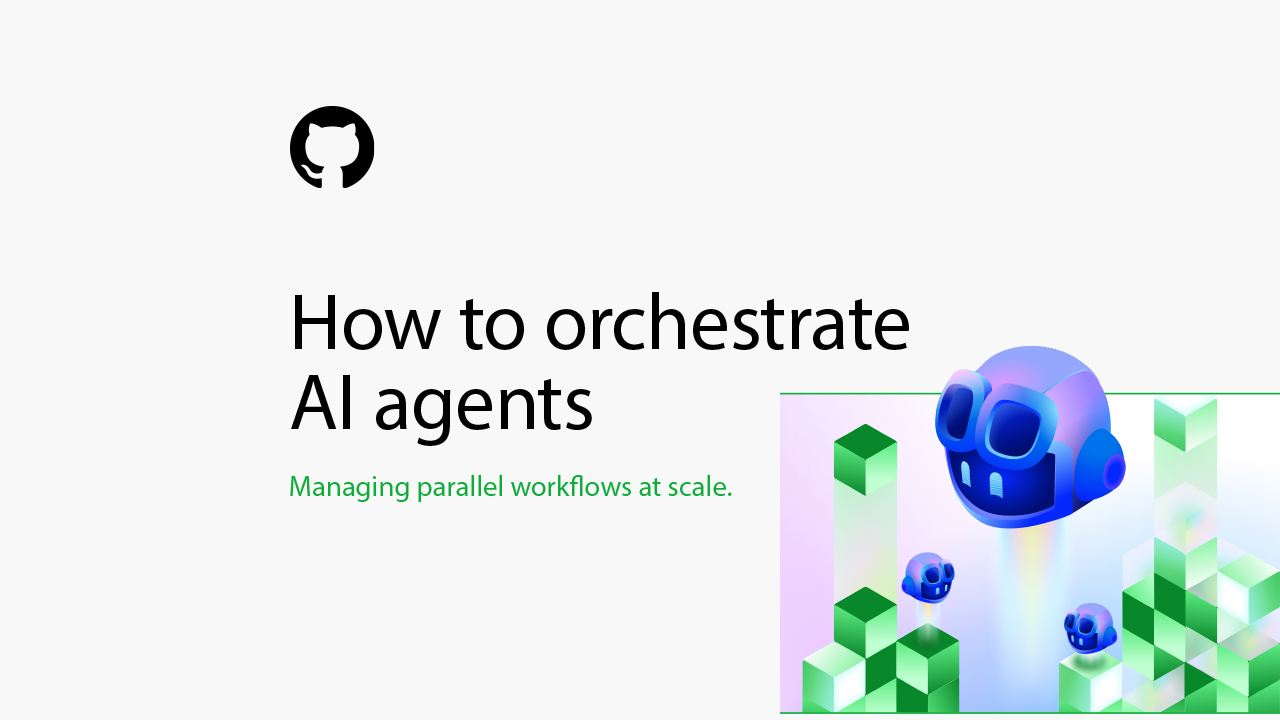
AI agents are shifting from synchronous support tools to autonomous contributors that can refactor code, generate tests, and run maintenance work asynchronously. But once teams adopt parallel, multi-agent workflows, constraints change: preventing drift, duplicated effort, merge conflicts, and inconsistent architectural decisions becomes the real work.
This guide illustrates how to orchestrate agents with clear specs, repo-level guardrails, real-time observability, and a repeatable review loop—so organizations can scale throughput without sacrificing reliability, security, or governance.
In this ebook you’ll learn how to:
- Shift from synchronous AI usage to asynchronous, multi-agent workflows that increase throughput and reduce bottlenecks
- Decide when to run agents in parallel vs. sequentially to avoid merge conflicts and protect system integrity
- Write clear issues that act as step-by-step instructions, so agent output is predictable and easy to review
- Establish governance at scale with guardrails, custom agents, and repository-level standards
- Monitor, steer, and continuously improve agent workflows using session logs and a structured review process that ensures quality, security, and alignment before merging